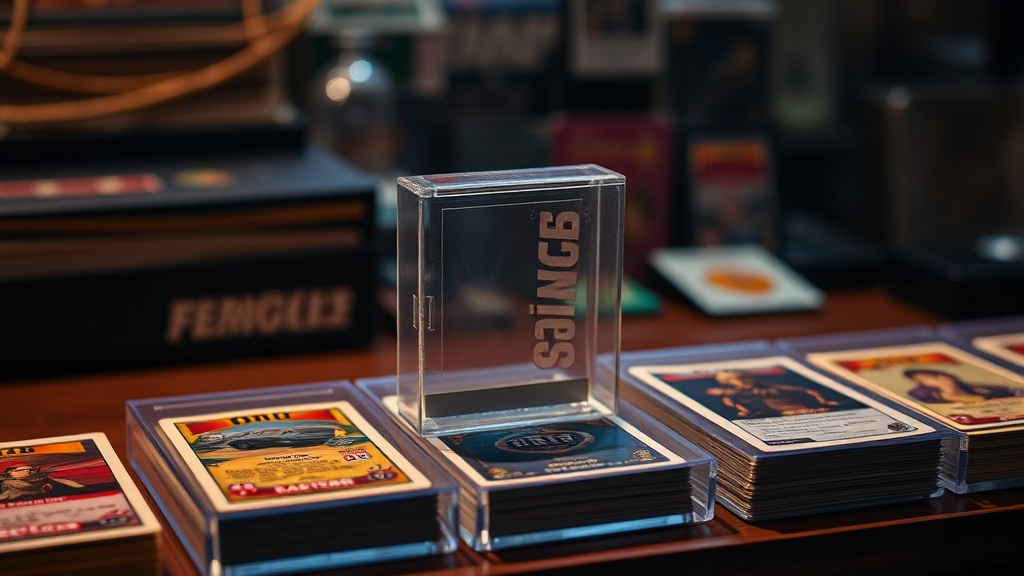
Why Your Card Collection Needs More Than Just a Plastic Case

The Myth of the "Set and Forget" Collection
Many collectors assume that once a card is inside a top loader or a slab, its fate is sealed. They think a piece of plastic acts as an impenetrable shield against the passage of time. This is a mistake. A card inside a case is still subject to the physics of its environment—temperature shifts, chemical off-gassing, and even the subtle weight of its own packaging. If you aren't looking at the room around your collection, you aren't looking at the whole picture.
Ignoring the environment doesn't just risk a single card; it puts your entire investment at risk. A slight uptick in room temperature or a sudden spike in humidity can turn a high-grade rookie card into a warped, damaged mess in a matter of months. We need to talk about the things that happen *outside* the plastic.
Is Air Quality Important for Trading Cards?
It sounds strange—why would air matter for a piece of cardboard? The answer lies in the chemical composition of the atmosphere. Most modern basketball cards are printed on cardstock that is highly absorbent. When air carries high levels of moisture or pollutants, those elements interact with the card's surface. This can lead to "foxing" (those tiny brown spots often seen on older vintage cards) or even a breakdown of the ink layers.
If you keep your collection in a basement or a garage, you're inviting trouble. These areas often have inconsistent air quality and fluctuating humidity levels. Even if your cards are in "airtight" holders, nothing is truly airtight. Micro-particles can still migrate. Keeping your collection in a climate-controlled living space—rather than a storage unit—is the first step to longevity. You can check current humidity guidelines from resources like the National Weather Service to understand how air stability affects your local environment.
Does Temperature Fluctuations Ruin Card Grading?
Temperature is the silent killer of high-end collections. When a room gets hot, the materials in your plastic-sleeved cards expand. When the room cools down, they contract. This constant, microscopic movement—often called thermal cycling—can cause the card to pull away from the edges of the sleeve or even cause the cardstock to warp or "bow."
If you've ever opened a graded slab only to find the card looks slightly curved, you've experienced the effects of heat. This is particularly common when collectors keep their displays near windows or near heating vents. A stable environment is your best friend. You don't need a specialized vault, but you do need a space where the temperature stays consistent throughout the day and night.
How Do I Prevent Card Warping in My Display?
Prevention starts with how you position your items. If you use display stands or acrylic cases, don't assume they are permanent solutions. Many collectors use heavy acrylic cases that can actually trap heat if placed under direct sunlight. This creates a mini-greenhouse effect inside the case, which can soften the card's surface.
Consider these practical steps to keep your cards straight:
- Avoid Direct Light: Never place your display near a window where the sun hits it directly. UV is bad, but heat is often worse for physical structure.
- Use High-Quality Sleeves: Not all "penny sleeves" are created equal. Look for brands that use acid-free, archival-quality materials.
- Monitor Your Storage: If you use a storage bin, ensure it's not sitting directly on a cold concrete floor.
A great way to track your collection's health is to look at the secondary market. Sites like eBay often show the price difference between a "Gem Mint" card and a slightly imperfect one. That price gap is the direct result of how well that card was treated over time. A card that looks slightly bowed or has surface dullness will never fetch the same premium, regardless of the player's stats.
We also need to talk about the weight of the collection. If you stack your cards too high in a box, the weight of the top cards can actually compress the bottom ones, leading to permanent bends. It’s a subtle thing, but it happens more often than people realize. Instead of deep, heavy stacks, try using shallower, organized boxes that spread the weight across a larger surface area.
Think of your collection like a living thing. It reacts to the world around it. If you treat it like a static object, you'll eventually find yourself staring at a collection of ruined cardboard. By paying attention to the air, the light, and the temperature, you aren't just storing cards—you're preserving history.