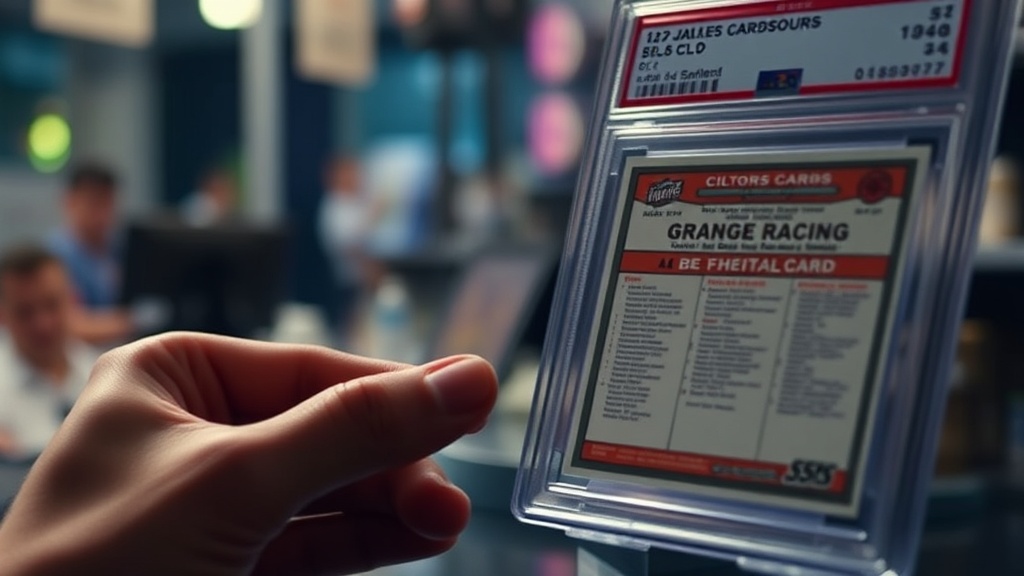
Why Should You Care About Card Grading and Slabbed Collections?

Why does the grade on a card matter so much?
Have you ever looked at a card that looks absolutely perfect to your naked eye, only to find out it received a PSA 8 instead of a PSA 10? It's frustrating, isn't it? For many collectors, the distinction between a high-grade slab and a lower-grade one is the difference between a hobbyist's joy and a serious investment. This post covers why professional grading exists, how it affects market value, and why certain collectors swear by it while others find it unnecessary.
The process of grading involves sending a card to a third-party service—like PSA, BGS, or SGC—where experts inspect the physical attributes of the card. They aren't just looking for big scratches; they're checking centering, corner sharpness, surface texture, and edges. Even a microscopic flaw can drop a grade significantly. This matters because, in the modern basketball card market, the grade often dictates the liquidity and the price of the item. If you want to trade or sell, a slabbed card is a much easier sell than a loose one.
One big mistake people make is assuming their eyes are as good as a professional's. A professional grader uses high-powered magnification and specialized lighting to see things we simply can't. This level of scrutiny is what creates the standardized scale used by collectors worldwide. Without it, one person's "mint" would be another person's "near mint." This standardization allows for a global marketplace where buyers and sellers speak the same language.
What are the different types of grading services?
When you decide to step into the world of graded cards, you'll see various names popping up. You'll likely run into the big players first. PSA (Professional Sports Authenticator) is often considered the gold standard for basketball cards because of its high resale value and widespread recognition. Then there's Beckett, known for its BGS grading, which offers a more detailed sub-grade system (centering, corners, edges, surface) that some collectors find more transparent.
Each service has its own reputation and quirks. Some are faster, while others are more meticulous. It's worth noting that a card graded by SGC might sell for a different price than the exact same card graded by PSA. This isn't necessarily because one is "better" at grading, but because the market assigns different values to different brands. You'll want to keep an eye on the current trends to see which service is currently holding the most weight for specific basketball eras or card sets. For example, vintage collectors often have a strong preference for certain services over others based on how they handle older, more fragile cardboard.
It's also important to understand that grading isn't just about the number. It's about the slab itself. The plastic holder (the "slab") protects the card from environmental damage like humidity or physical handling. This physical protection is a major selling point. If you're holding a rare LeBron James rookie, you don't want to be worried about a stray fingerprint or a bit of dust. The slab provides a sense of security and professionalism that a simple penny sleeve can't match.
Is it worth grading my basketball cards?
This is the million-dollar question (sometimes literally). To determine if it's worth it, you have to do the math. You need to weigh the cost of the grading fee, the shipping, and the insurance against the potential increase in the card's value. If you have a common rookie card that's worth $10 in raw form, spending $40 to grade it is a losing battle. However, if that same card has the potential to hit a $500 value as a PSA 10, the math starts looking a lot better.
There are three main scenarios where grading becomes a smart move:
- High-Value Hits: If you pull a high-end autograph or a rare parallel, it almost always deserves a grade. The protection and the verified status are vital for these premium items.
- Volume Collecting: If you are looking to build a set of high-grade rookies, grading can help you create a cohesive, high-value collection that looks professional on a shelf.
- Resale Strategy: If your goal is to flip cards for profit, selling a graded card is much faster. Most serious buyers won't even look at a high-end card unless it's already in a slab.
Don't forget to consider the "opportunity cost." While your cards are at the grading facility, they aren't in your hands. You can't trade them, you can't show them off, and you can't sell them on a whim. This- especially in a fast-moving market- can be a disadvantage if a player's value is spiking. Check out eBay's recent sales data to see if the current market-to-grade ratio favors your specific cards before you send them off.
How do I prepare cards for the grading process?
Preparation is where many beginners fail. You can't just throw a card in an envelope and hope for the best. First, ensure the card is truly worthy of the expense. I always suggest using a jeweler's loupe or a high-powered magnifying glass to do a preliminary check. If you see a surface scratch or a corner ding that you can't fix, don't waste your money. A grade won't change a physical flaw.
When packing, use high-quality non-PVC sleeves. Some cheap sleeves can actually react with the card's surface over time, creating a "cloudy" look that can hurt your grade. Once the card is in a sleeve, place it in a top loader or a semi-rigid holder. This provides a layer of physical protection during transit. Most grading companies have very specific instructions on how to package your items—follow them to the letter. A single bent corner from a bad shipping job will turn your potential gem into a junk box filler.
Lastly, keep your records organized. If you're sending in a large batch, create a spreadsheet. List the player, the set, the year, and the approximate value. This isn't just for your own sanity; it's for insurance purposes. If a package goes missing or a card is damaged, you'll need documentation to prove what was in that box. It's a tedious step, but it's one that saves a massive amount of headache down the road.
| Step | Action | Reason |
|---|---|---|
| Pre-Inspection | Check corners and edges | Avoid wasting money on low-grade potential |
| Cleaning | Use a microfiber cloth (carefully) | Remove dust or fingerprints |
| Protection | Use non-PVC sleeves | Prevent chemical reactions |
| Documentation | Create a detailed list | Essential for insurance and tracking |
Whether you're a seasoned veteran or just starting to move from loose cards to slabs, understanding this process is what separates the collectors from the investors. It's a nuanced part of the hobby, but once you get the hang of it, it becomes a powerful tool in your collection-building arsenal.