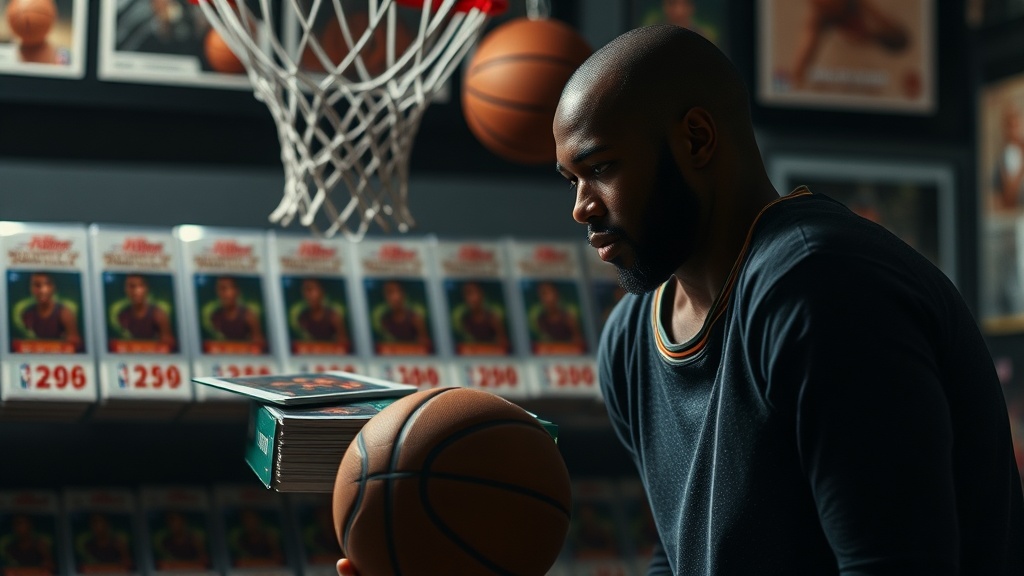
How to Store and Protect Your Basketball Card Collection Like a Pro

This guide covers everything needed to store and protect basketball cards the right way — from sleeves and top loaders to temperature control and long-term organization. Whether the collection includes a few rookie cards or hundreds of graded slabs, proper storage keeps condition sharp and value intact. The difference between a PSA 10 and a PSA 8 can come down to how a card sat in a closet for five years. That said, the good news is that protecting cardboard isn't complicated. It just takes the right supplies, a consistent system, and a little awareness about what causes damage in the first place.
What supplies do you need to store basketball cards safely?
You'll need penny sleeves, top loaders or card savers, storage boxes, and a clean, dry place to keep everything. These four basics cover 90% of protection needs for raw (ungraded) cards. Start with penny sleeves — thin polypropylene sleeves that cost next to nothing and keep fingerprints, dust, and surface grime off the card face. Ultra-PRO and BCW make the most trusted versions, and both fit standard 2.5" by 3.5" cards without excess slack.
Next comes the rigid layer. Top loaders are stiff plastic sleeves that prevent bending, corner dings, and edge wear. They're perfect for cards that get handled often — think PC favorites or cards heading to a show. For grading submissions, Card Saver 1 semi-rigid holders are the standard PSA prefers. They're thinner than top loaders, easier to stack, and less likely to crack in transit.
For bulk storage, BCW cardboard boxes and Monster storage boxes hold hundreds to thousands of sleeved cards. Binders work too — but only if they use D-rings and pocket pages without PVC. (PVC leaks plasticizers over time. That creates a sticky film that ruins surfaces.) One-touch magnetic holders look great on a desk, but they're heavy, expensive, and not ideal for shoebox storage. Use them for display pieces, not deep storage.
Worth noting: supply quality matters more than supply quantity. A $100 card in a flimsy dollar-store sleeve is riskier than a $5 card in an Ultra-PRO sleeve and a fresh top loader. Don't buy holders from questionable sources — counterfeit or off-brand plastics sometimes contain PVC or acid that degrades cardstock. Stick to hobby shops, trusted online retailers, or brands that the collecting community has vetted over decades.
How should you store basketball cards to prevent damage?
Store cards upright in boxes or binders, never loose in piles, and always keep them away from direct sunlight and moisture. The biggest threat to a basketball card isn't a drop from the table — it's slow, invisible damage from heat, humidity, and friction. When cards sit flat in a stack, the weight of the pile compresses edges and can leave surface impressions. Standing them vertically — like books on a shelf — distributes pressure evenly and prevents warping.
Always sleeve before loading. Sliding a raw card into a top loader without a penny sleeve is asking for surface scratches. The plastic can grip the card face, especially if there's static buildup. Here's the thing: top loaders come in different thicknesses — 20pt, 55pt, 100pt, 130pt, and up — so match the holder to the card. A standard base card fits a 20pt. A patch auto or memorabilia card might need 130pt or more. Forcing a thick card into a thin holder crimps corners and leaves stress lines.
For high-value singles, consider Team Bags — resealable poly sleeves that go over the top loader. They seal out dust and keep the card from sliding out during transport. If a card is heading to PSA for grading, use a Card Saver 1 inside a Team Bag with painters tape across the opening. (Never use Scotch tape directly on a holder — residue transfers, and graders hate it.) When shipping multiple cards, sandwich them between two pieces of cardboard and wrap the whole bundle in bubble wrap. A padded mailer alone isn't enough protection for anything worth more than a lunch tab.
Are top loaders or card savers better for shipping and grading?
Card savers are better for grading submissions because PSA and most third-party graders prefer them, while top loaders are better for everyday protection and local trading. The choice depends on what the card is doing next. Here's a breakdown:
| Feature | Top Loader | Card Saver 1 |
|---|---|---|
| Rigidity | Very stiff — excellent corner protection | Semi-rigid — prevents bending without bulk |
| Grader preference | Not preferred by PSA; accepted by some smaller services | Preferred by PSA, BGS, and SGC |
| Shipping safety | Can crack if pressure is applied | Flexible — less likely to break in mailers |
| Storage density | Takes up more space per card | Thinner — more cards per box |
| Cost | ~$0.08–$0.15 each | ~$0.10–$0.20 each |
| Best use case | Daily handling, local trades, PC display | Grading prep, long-term vault storage |
The catch? Some collectors overthink this choice. For a $5 rookie card that might get traded at the next card show, a top loader in a Team Bag is perfectly fine. For a Beckett-tracked high-pop rookie auto heading to PSA, a Card Saver is the safer play. Either way, avoid rubber-banding stacks of top loaders — the pressure warps cards and leaves indent marks on the plastic that can transfer to surfaces.
When shipping graded slabs, the rules change. PSA and BGS slabs are thick, hard plastic that doesn't bend, but they can still crack if dropped on a hard floor. Wrap slabs in bubble wrap and use a box, not a mailer. Some sellers even use slab-specific foam inserts. It's overkill for a $30 card, but smart for a $3,000 card.
What environmental conditions ruin basketball cards?
Heat, humidity, light, and airborne pollutants all ruin basketball cards over time — sometimes in ways that only show up months or years later. The ideal storage environment is cool, dry, dark, and stable. That means between 60°F and 70°F with relative humidity around 30% to 50%. Basements and attics are usually the worst spots. Basements flood. Attics bake. A closet inside the main living area — away from exterior walls and vents — is usually the safest bet.
Sunlight is sneaky. Even indirect light through a window can fade card fronts and bleach borders over years. That's why graded slabs with UV-resistant labels still shouldn't sit on a windowsill. If cards are displayed, keep them out of direct sun or use UV-filtering glass. (Museum glass works, but it's pricey. A shaded wall across from the window is free.)
Humidity does damage fast. Above 60% relative humidity, cardboard absorbs moisture and starts to curl. Corners soften. Mold becomes a real risk — and mold destroys value permanently. On the flip side, air that's too dry (below 30%) can make cards brittle and cause cracks in vintage stock. Worth noting: silica gel packs help in humid climates, but they need to be checked and recharged. Don't just toss one in a box and forget it for a decade.
Another hidden threat? Cigarette smoke, cooking grease, and airborne dust. Cards act like tiny sponges for odor and particulates. A collection stored in a garage near a workshop will pick up a smell that never fully washes out. Keep boxes sealed, and if a card is being stored long-term, a sealed plastic bin beats an open cardboard box every time. That said, plastic bins aren't perfect — they can trap moisture if cards go in damp. Make sure everything is bone-dry before sealing it up.
How do you organize a growing basketball card collection?
The best system is the one that gets used — whether that's by team, player, year, set, or value tier. Start broad, then narrow down as the collection grows. Many collectors begin by sorting into teams because it's intuitive and makes building sets easier. Others prefer chronological sorting (year, then set, then card number) because it mirrors how price guides and databases like Trading Card Database list cards.
Here's the thing: organization isn't just about finding cards. It's about protecting them. When cards are sorted and labeled, they get handled less. Less handling means fewer opportunities for corner wear, surface scratches, and accidental drops. Use dividers in storage boxes — BCW makes cardboard dividers that fit standard boxes — and label each section with a Sharpie on masking tape.
For digital tracking, apps like CollX and hobby spreadsheets help keep tabs on what's owned, what's incoming, and what's for sale. Kira Santos out in Boise swears by a simple Google Sheet with columns for player, year, set, card number, condition estimate, and purchase price. (No need for fancy software when a spreadsheet does the job.) That said, if the collection crosses into five or six figures, insurance documentation becomes important — and a detailed inventory makes claims much easier.
One final tip on growth: don't overfill boxes. A 3,200-count Monster box packed to the brim stresses the bottom cards and makes the whole stack unstable. Leave 5% to 10% headroom. Rotate older boxes to the back. And every few months, pull a random stack and check for signs of damage — curling, whitening, or mysterious new surface marks. Catching problems early is the only way to stop them from spreading.
Protecting basketball cards comes down to respect for the cardboard. The right sleeves, the right environment, and a system that keeps everything findable. Do that, and the collection stays sharp — ready for the next trade, the next grade, or the next generation.