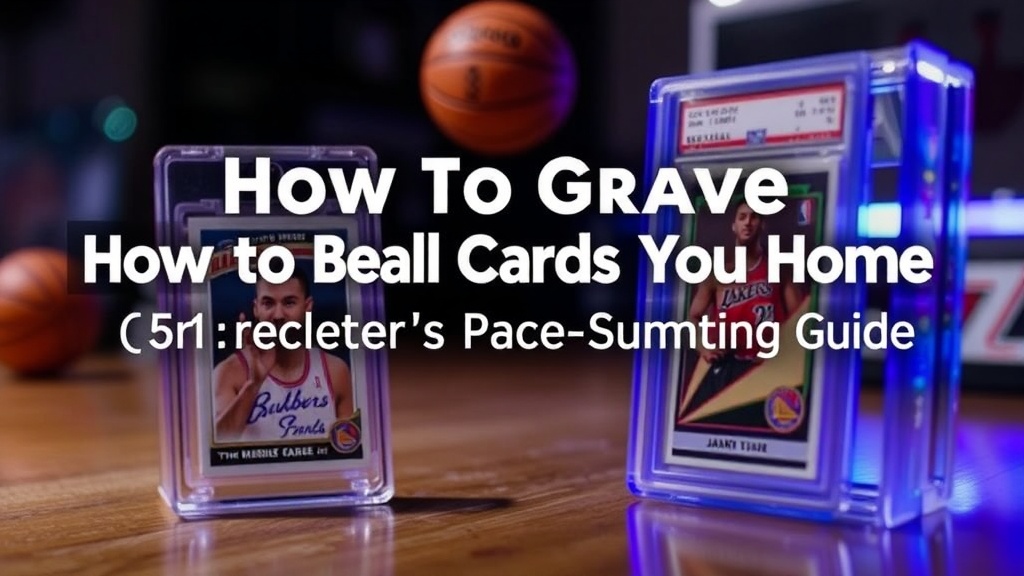
How to Grade Basketball Cards at Home: A Collector's Pre-Submission Guide

This guide breaks down exactly what professional graders look for — and how to evaluate your own cards before shelling out $25–$300 for official grading. You'll learn to spot surface flaws, check centering with precision, and identify which cards are even worth submitting. Skip the disappointment of "Expected 9, got 6" and make smarter decisions about your collection.
What Do Professional Graders Actually Look For?
PSA, BGS, SGC, and CGC all evaluate the same four categories: centering, corners, edges, and surface. Each category gets a score (usually 1–10), and the final grade reflects the worst defect — not an average.
Here's the thing: a card with three 9.5 subgrades and one 7.0 might still gem at BGS, but PSA is stricter about overall appearance. Understanding these nuances matters before choosing a service.
| Grading Category | What They're Checking | Common Killer Flaws |
|---|---|---|
| Centering | Border thickness ratio (usually 60/40 or better for 10s) | Off-center printing, tilted images |
| Corners | Sharpness, whitening, fraying | Soft corners, dings, rounding |
| Edges | Clean, smooth borders without chipping | Edge chipping from poor cutting |
| Surface | Scratches, print lines, gloss consistency | Factory roller marks, fingerprints |
The catch? Print defects you can't see under normal light might torpedo an otherwise pristine card. That's why proper lighting tools matter — more on that shortly.
What Tools Do You Need for At-Home Card Grading?
You don't need a professional setup, but a few specific tools make accurate pre-grading possible. Expect to spend $30–$100 on basics that'll save hundreds in rejected submissions.
The Magnification Setup
A 10x loupe is non-negotiable. The Belomo 10x Triplet Loupe runs about $35 and reveals surface scratches invisible to the naked eye. Phone macro lenses work in a pinch, but a real loupe provides consistent results.
Worth noting: 20x magnification starts showing grain structure and can actually create false alarms. Stick with 10x for realistic assessment.
Lighting That Reveals the Truth
Natural daylight helps, but it's inconsistent. A Daylight LED lamp with 5,000K color temperature shows flaws without the warm-yellow wash of incandescent bulbs. Position the light at an angle — direct overhead lighting hides scratches that angled light exposes.
Measurement and Protection
Grab a center gauge tool (available from BCW Supplies) or use a simple digital caliper to measure border ratios. Keep cards in card sleeves and toploaders during examination — one slip and you're grading damaged goods.
Recommended starter kit:
- Belomo 10x Triplet Loupe — $35
- OttLite Natural Daylight LED Desk Lamp — $45
- Digital caliper or centering tool — $15
- Soft cotton gloves (optional but smart) — $8
How Can You Tell If a Card Is Worth Grading?
Not every card deserves the slab. Submission costs — including shipping, insurance, and grading fees — add up fast. A card needs to justify that investment through either value protection or resale premium.
The Value Threshold Test
Raw cards under $50 rarely benefit from grading unless you're building a registry set. Here's the math: PSA Economy service runs $25–$30 per card plus shipping both ways. If the graded 9 sells for $40 and the raw copy sells for $25, you've lost money.
That said, vintage cards (pre-1980) break this rule — even common players in high grades carry premiums because population reports show genuine scarcity.
Condition Confidence Checklist
Before submitting, run through this honest assessment:
- Surface scan under 10x: Any scratches crossing the image? Print lines through the text?
- Corner check: Hold at eye level — do corners catch light differently (indicating rounding)?
- Edge inspection: Run a fingernail gently along each edge. Catching means chipping.
- Centering measurement: Use a center gauge or digital caliper. 60/40 is the gem mint threshold.
- Holocaust test: Would you be genuinely shocked to get an 8? If yes, maybe don't submit.
"If you can't confidently call it a 9 after your own inspection, expect an 8 from PSA. Graders don't give the benefit of the doubt."
Understanding Population Reports
Before submitting, check PSA's Population Report or BGS Population data. A card with 500 PSA 10s in circulation isn't rare — even if it's 30 years old. Low pop counts in high grades create genuine scarcity premiums.
What Are the Differences Between PSA, BGS, and SGC?
Each service has strengths, weaknesses, and market preferences. Your choice affects both the grade you'll likely receive and the resale value of the finished slab.
| Service | Best For | Grading Philosophy | Market Premium |
|---|---|---|---|
| PSA | Vintage, mainstream modern | Overall eye appeal; forgiving centering | Highest for most cards |
| BGS (Beckett) | Modern high-end, subgrade chasers | Strict on corners and centering | Premium for Black Label 10 |
| SGC | Pre-war vintage, T206 era | Consistent, tough but fair | Strong for vintage only |
| CGC | Modern cards, error cards | Technical, transparent | Growing acceptance |
Here's the thing: PSA 10s often outsell BGS 9.5s despite BGS being stricter. The market follows PSA for most basketball cards — particularly 1980s and 1990s issues. For modern Prizm and Optic chrome cards, BGS Black Label 10s command true premiums.
Submission Tips That Actually Matter
Card savers — those semi-rigid holders — beat top loaders for submissions. They don't crack in transit and fit grading company machinery better. Use painter's tape (folded over itself, not touching the card) to secure cards in holders.
The catch? Declared value matters. Under-declare and you risk insufficient insurance. Over-declare and you pay higher grading fees. Research recent sales on eBay or PWCC for realistic valuations.
Handling and Storage Best Practices
Never handle raw cards by the edges you'll be grading. Hold vintage cardboard by the borders, modern chrome cards by the corners you're least confident in. Body oils transfer — and graders notice.
Storage environment affects condition over time. Keep cards in a cool, dry place (65–70°F, 30–50% humidity). Silica gel packets in storage boxes prevent the moisture damage that causes surface dimpling on chrome cards.
When Should You Crack and Re-Submit?
Crossover grading — cracking a PSA slab to submit to BGS hoping for better — is controversial and risky. The math rarely works in your favor.
That said, if you genuinely believe a PSA 8 deserves reconsideration (and you bought it raw originally), re-grading makes sense. Document everything with photos before cracking. Once that case opens, you're committed.
Worth noting: SGC and CGC will sometimes grade higher than PSA on modern cards with print defects PSA penalizes heavily. The market hasn't fully caught up, but savvy collectors watch for these arbitrage opportunities.
Pre-grading at home isn't about replacing professional services — it's about being selective with your submission dollars. The collectors who build valuable graded collections aren't submitting everything; they're submitting cards that survived honest scrutiny. Invest in proper tools, learn to see what graders see, and let the market rewards follow.
Steps
- 1
Inspect centering using a clear grading tool or ruler to measure border symmetry
- 2
Examine corners and edges under bright light for whitening, dings, and wear
- 3
Check surface for scratches, print lines, and holo damage with a magnifying glass